Обзор основных технологий для дронов: технологическое ядро, адаптирующееся к нескольким сценариям
Nowadays, drones have become an important tool for intelligent upgrading in various industries, from civilian aerial photography and agricultural crop protection to professional power inspection and emergency rescue. The expansion of their application scenarios cannot be separated from the diversified development of technology types. As a manufacturer deeply involved in the field of unmanned aerial vehicles, this article will focus on the four core technical dimensions of flight platforms, power systems, control methods, and mission payloads, and use concise language to analyze the characteristics and adaptation scenarios of mainstream types.
The flight platform is the basic carrier of unmanned aerial vehicles, and the mainstream types can be divided into four categories. Fixed wing unmanned aerial vehicles rely on wing lift for flight, with long endurance and fast speed, suitable for large-scale surveying and remote reconnaissance, but require runway takeoff and landing, lacking flexibility. Multi rotor unmanned aerial vehicles (mainly consisting of four, six, and eight rotors) are capable of vertical takeoff, landing, and hovering, with convenient operation and strong maneuverability. They are the main force in the civilian field and are widely used in aerial photography, crop protection, and other applications. Helicopters and drones have outstanding load-bearing capacity and can adapt to complex environments. They are often used for professional inspection and rescue, but have high difficulty in operation and maintenance costs. The fusion of the first two advantages of composite wing unmanned aerial vehicles, which combines vertical takeoff and landing and long endurance characteristics, has become a technological hotspot in recent years.
The power system determines the range and operating radius of the drone, and there are mainly three types: electric, fuel, and hybrid. The electric system, with lithium batteries as its core, has low noise and easy maintenance, making it the preferred choice for multi rotor drones. However, its range is relatively short (tens of minutes to several hours). The fuel system has high power and long endurance (several hours to tens of hours), suitable for medium and large fixed wing, helicopter and unmanned aerial vehicles for remote surveying and other scenarios, but there are noise and pollution problems. The hybrid system can use electric mode during takeoff, landing, and hovering, and switch to fuel mode during cruising, balancing maneuverability and long range. It is the core configuration of high-end products.
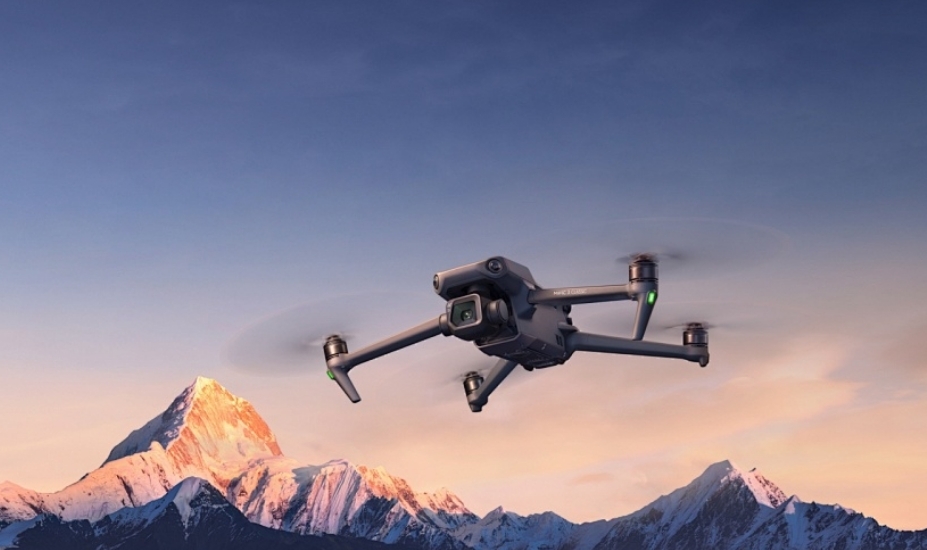
Control technology, as the "brain" of drones, can be divided into three categories: manual, semi-automatic, and fully automatic. Manual control requires real-time operation by operators, suitable for precise operation scenarios such as aerial photography and entertainment, and requires high skills. Semi automatic control can achieve functions such as fixed height, fixed-point hovering, and automatic return, reducing the difficulty of operation and adapting to professional operations such as agricultural crop protection and power inspection. Fully automatic control achieves autonomous operation throughout the entire process through preset routes and high-precision sensors, without the need for manual intervention. It is suitable for large-scale surveying and cluster operations and is the core development direction of the future.
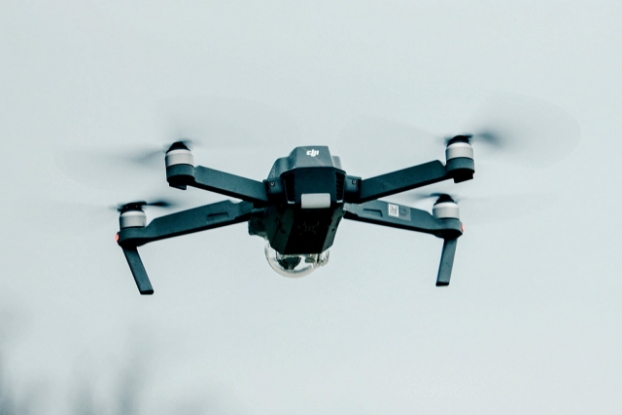
The task payload is the key to achieving specific functions of unmanned aerial vehicles, which can be divided into types such as surveying, crop protection, monitoring, and rescue according to the scenario. Surveying payloads (high-definition cameras, LiDAR, etc.) are used for terrain modeling and cultural relic surveys; Plant protection payload (pesticide spraying system) achieves precise variable spraying; Monitoring payloads (gas, temperature sensors, etc.) adapted to environmental monitoring and forest fire prevention; Rescue payloads (lifebuoy deployment, emergency communication equipment) can assist in disaster scene rescue.
The combination of different types of technologies has achieved the scene adaptability of drones. We always take scenario requirements as the guide, integrate and optimize core technologies, and provide customized solutions. In the future, with the integration and innovation of technology, drones will continue to empower the development of more industries.