Понимание основных технологий дронов в одной статье: всеобъемлющий анализ от полета до применения
With the rapid development of drone technology, it has widely penetrated into many fields such as aerial surveying and mapping, agricultural crop protection, power inspection, emergency rescue, etc. As a drone manufacturer, we are well aware that technological differentiation is the core to meeting the needs of different scenarios. This article will break down the main technical types of drones from four core dimensions: flight platform, power system, control mode, and mission payload, and take you on a comprehensive understanding of the diverse system of drone technology.
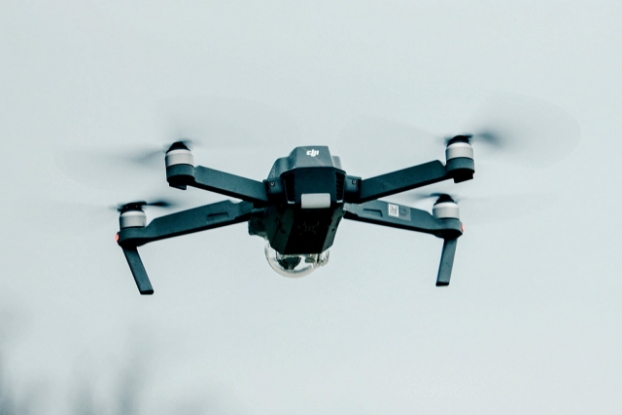
Flight platform technology is the foundation of unmanned aerial vehicles, mainly divided into four categories: fixed wing, multi rotor, helicopter, and composite wing. Fixed wing drones rely on the lift generated by their wings to fly, with long endurance and fast flight speed, making them suitable for large-scale mapping, remote reconnaissance, and other scenarios. However, they require runway takeoff and landing, and their flexibility is weak. Multi rotor unmanned aerial vehicles are currently the most mainstream type, commonly including quadcopters, hexacopters, and octacopters. By adjusting the speed of different rotors, vertical takeoff, landing, and hovering can be achieved. They are easy to operate and have strong maneuverability, and are widely used in civilian fields such as aerial photography, crop protection, and short distance logistics. Helicopters and drones adopt a single rotor and tail rotor structure, which has strong load-bearing capacity and adaptability to complex environments. They are mostly used in professional scenarios such as power inspection and emergency rescue, but the difficulty of operation and maintenance costs are relatively high. Composite wing drones combine the advantages of fixed wing and multi rotor systems, enabling vertical takeoff and landing as well as long endurance flight, effectively addressing the shortcomings of a single platform and becoming a popular technology direction in recent years.

The power system technology directly determines the endurance and operating radius of unmanned aerial vehicles, mainly including three types: electric, fuel, and hybrid. The electric power system is based on lithium batteries and has the characteristics of low noise, low pollution, and easy maintenance. It is the mainstream choice for multi rotor drones, but its endurance is relatively short, generally ranging from tens of minutes to several hours. Fuel power systems often use gasoline or diesel engines, which have high power and long endurance, up to several hours or even tens of hours. They are suitable for medium and large unmanned aerial vehicles such as fixed wings and helicopters, and are commonly used in remote surveying, long-term monitoring and other scenarios. However, they have problems with high noise and emission pollution. The hybrid system combines the advantages of electric and fuel, using electric mode in low-power scenarios such as takeoff and hover, and switching to fuel mode in high-power scenarios such as cruise, which can ensure maneuverability and extend range. It is an important technical configuration for high-end drones.
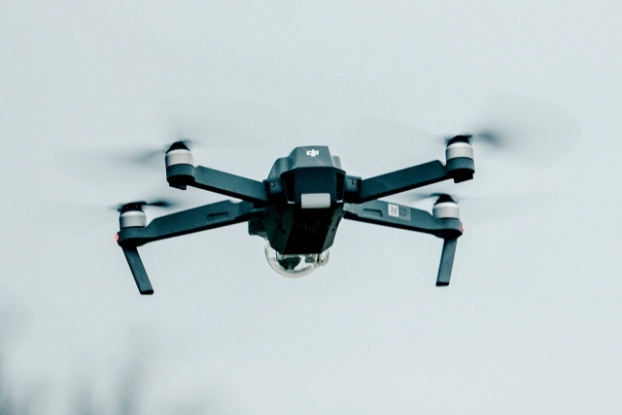
Control technology is the "brain" of drones, which can be divided into three categories: manual control, semi-automatic control, and fully automatic control. Manual control requires operators to control the drone's flight attitude and route in real time through a remote control, which is suitable for precise control scenarios such as aerial photography and entertainment, and requires high skills from operators. In semi-automatic control mode, drones can autonomously complete some flight tasks, such as fixed altitude flight, fixed-point hovering, automatic return, etc. The operator only needs to focus on the core operational requirements, reducing the difficulty of control and widely used in professional fields such as agricultural crop protection and power inspection. Fully automatic control is an advanced form of drone technology, which can autonomously complete the entire process of takeoff, operation, and landing without human intervention through preset routes, high-precision positioning systems, and obstacle avoidance sensors. It is suitable for large-scale mapping, cluster operations, and other scenarios, and is one of the core development directions of future drone technology.